Celine Song follows up Past Lives with Materialists, a sharp, deceptively breezy romantic drama that smiles politely while quietly judging you from across the room. If Past Lives was a meditation on emotional memory, Materialists is about emotional commerce. What we want, what we can afford, and what we tell ourselves we deserve.
Dakota Johnson plays Lucy, a professional matchmaker who treats love like a luxury condo. Location matters. Amenities matter. Compromises are non negotiable. Johnson leans into Lucy’s cool detachment, delivering line readings that feel intentionally undercooked, as if sincerity itself were bad manners. It is a performance that understands the assignment, even when it risks feeling a little airless.
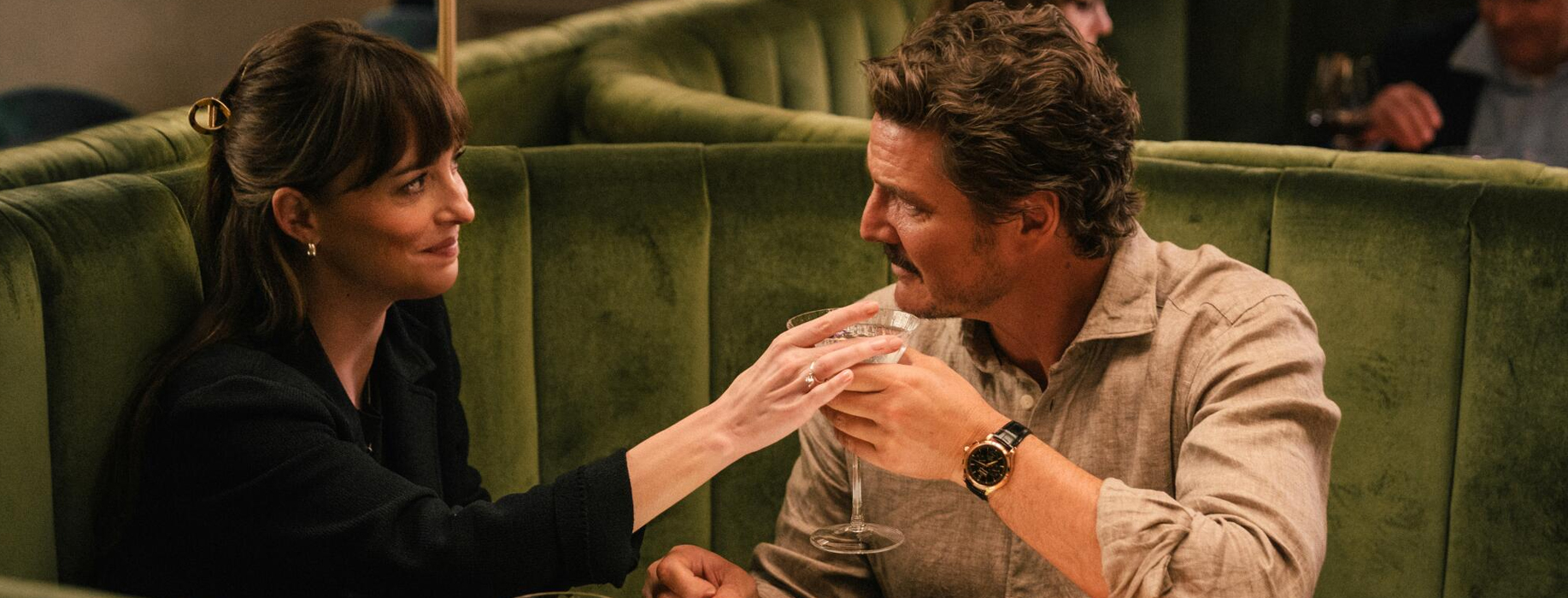
Enter Pedro Pascal as Harry, a walking upgrade package. He is wealthy, attentive, emotionally fluent, and presented like a perfectly lit showroom model. Pascal gives him warmth and humor, which is crucial, because on paper Harry could have been insufferable. Chris Evans plays John, Lucy’s ex, a struggling actor whose charm has aged into something slightly sour. Evans weaponizes his likability here, letting it curdle just enough to sting. Watching Lucy bounce between these men feels less like a love triangle and more like a cost benefit analysis conducted in heels.
Song’s direction is elegant and controlled, almost aggressively tasteful. The cinematography favors clean lines, expensive spaces, and emotional distance. New York looks beautiful and cold, like a city that has Venmo requests for feelings. The film recalls Broadcast News and Marriage Story in its talky intimacy, but it also has shades of The Worst Person in the World in how it interrogates modern romantic self branding.
The shortcoming is that Materialists sometimes feels too pleased with its own intelligence. The script lands its thesis early and keeps circling it, which blunts some of the emotional impact. You can see the conclusions coming, even if the performances keep them engaging.
Still, Materialists is smart, funny, and quietly uncomfortable in the best way. It asks whether love can survive when everything else has a price tag, then lets us squirm while answering.