Like a rusty scalpel slicing into an old wound, 28 Years Later doesn’t so much revive the franchise as autopsy it—and then reanimate the corpse. Danny Boyle, returning to the director’s chair after two decades away from the rage-virus playground he helped create, delivers a bleak, bloody, and undeniably cinematic reminder that the apocalypse isn’t over. It’s just older.
Jodie Comer leads as Isla, a haunted survivor navigating the latest viral flare-up in a world that’s learned nothing from the last three decades. Comer’s performance is electric: fierce but fractured, like a broken lightbulb that still sparks. She’s joined by Aaron Taylor-Johnson as the morally ambiguous soldier Jamie, and an unnervingly calm Cillian Murphy reprising his role as Jim—not the wide-eyed innocent from 28 Days Later, but a man whose silence now roars louder than any infected scream.
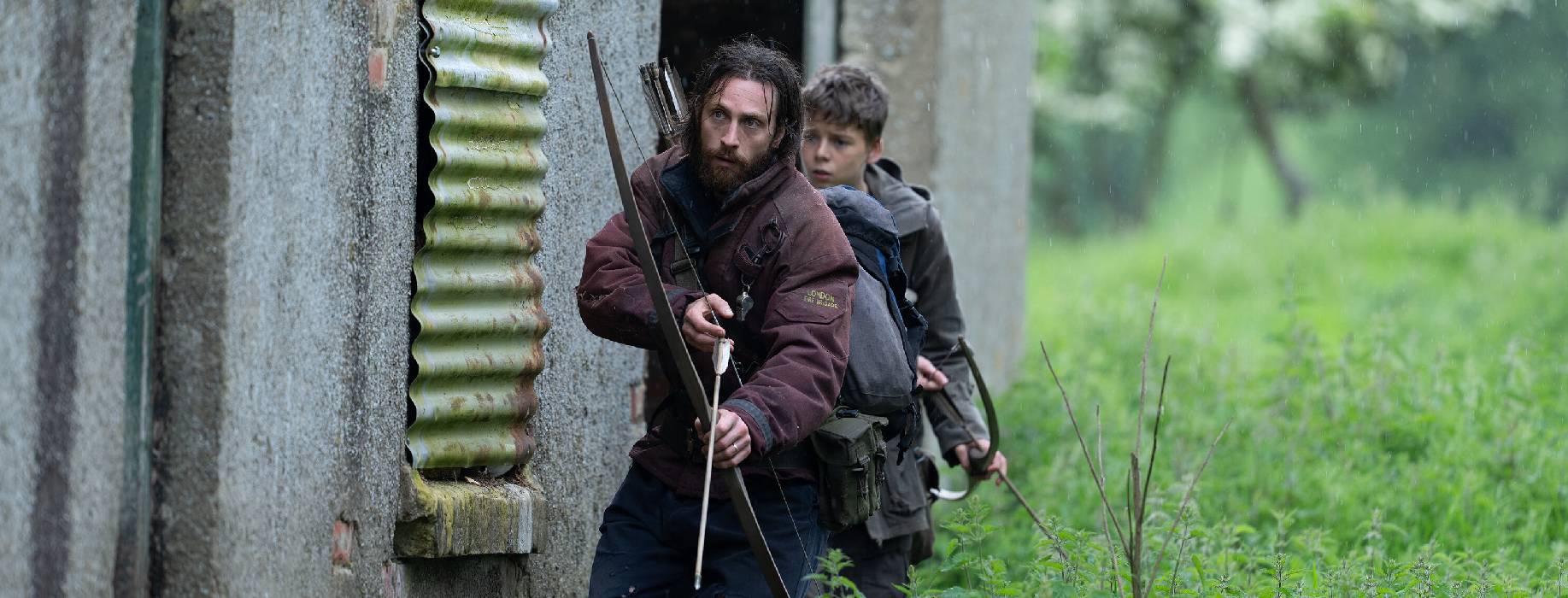
Then there’s Alfie Williams as Spike, a wiry boy with dirt on his face and defiance in his eyes. He’s not just running from the infected—he’s shielding his mother, who’s been bed-ridden by illness. Williams brings heartbreaking earnestness to Spike, a child forced to become both protector and pessimist. His loyalty, his tiny fists clutching a bow and arrow, his whispered bedtime stories to a fading parent—it’s quietly devastating. He grounds the film emotionally, reminding us that horror isn’t just in the virus, but in what it forces us to do for love.
Boyle’s kinetic direction is back with a vengeance. The camera shakes, lunges, and runs like it’s being chased (again), but never loses clarity. There’s a cold beauty to the decay, with gray-skied vistas and overgrown forests painting a UK that’s not just collapsed, but forgotten. Cinematographer Anthony Dod Mantle bathes the chaos in a desaturated chill that makes even fire look cold.
The score by Young Fathers is an industrial dirge pulsing beneath moments of tension and quiet dread, a perfect companion to Alex Garland’s script, which trades cheap scares for existential rot. Unfortunately, the third act wobbles, flirting with spectacle over substance. And a subplot involving a potential “cure” feels like it wandered in from a lesser, more hopeful movie.
Still, 28 Years Later earns its place. It’s less a sequel, more a reckoning. If 28 Days Later was a scream in the night, this one’s a slow, exhausted whisper: “We were the real virus all along.” Grim? Yes. But gripping.
RHFC Rating: 9.5/10 🍿